Transformer ratio meters (TTR)
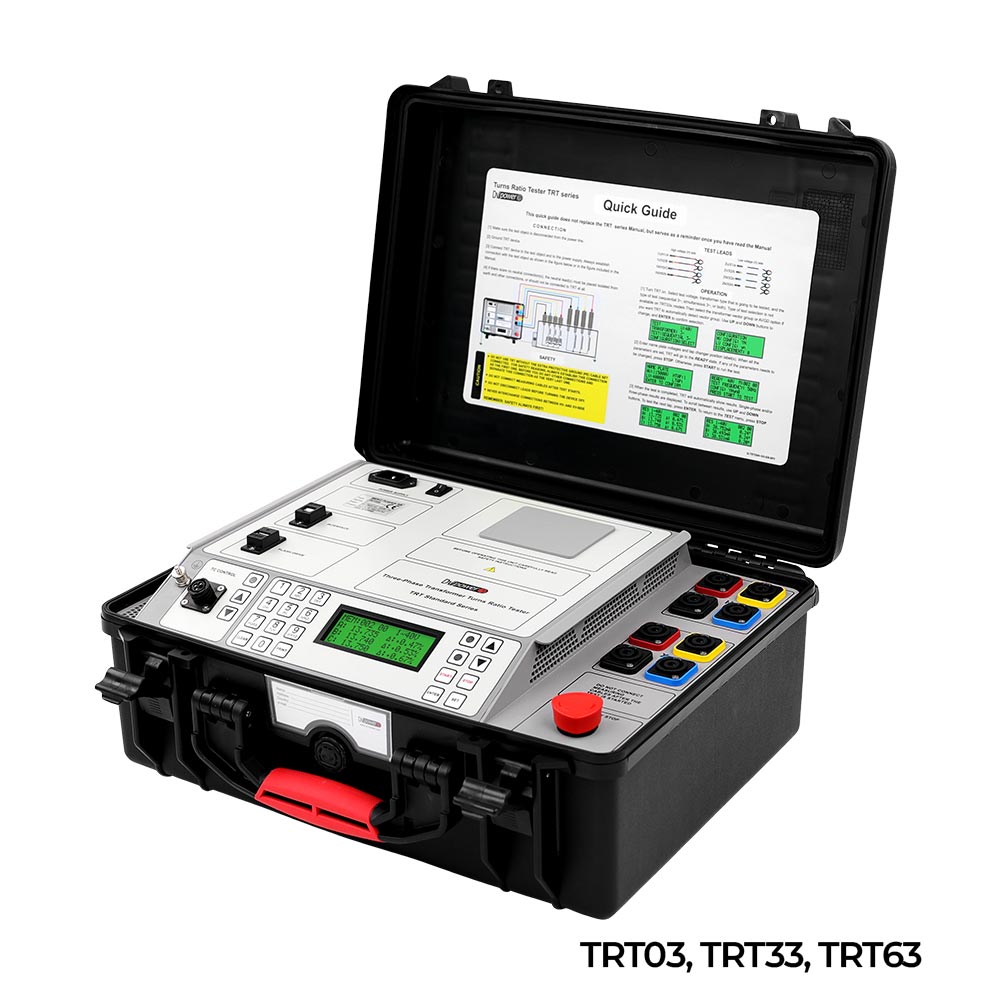
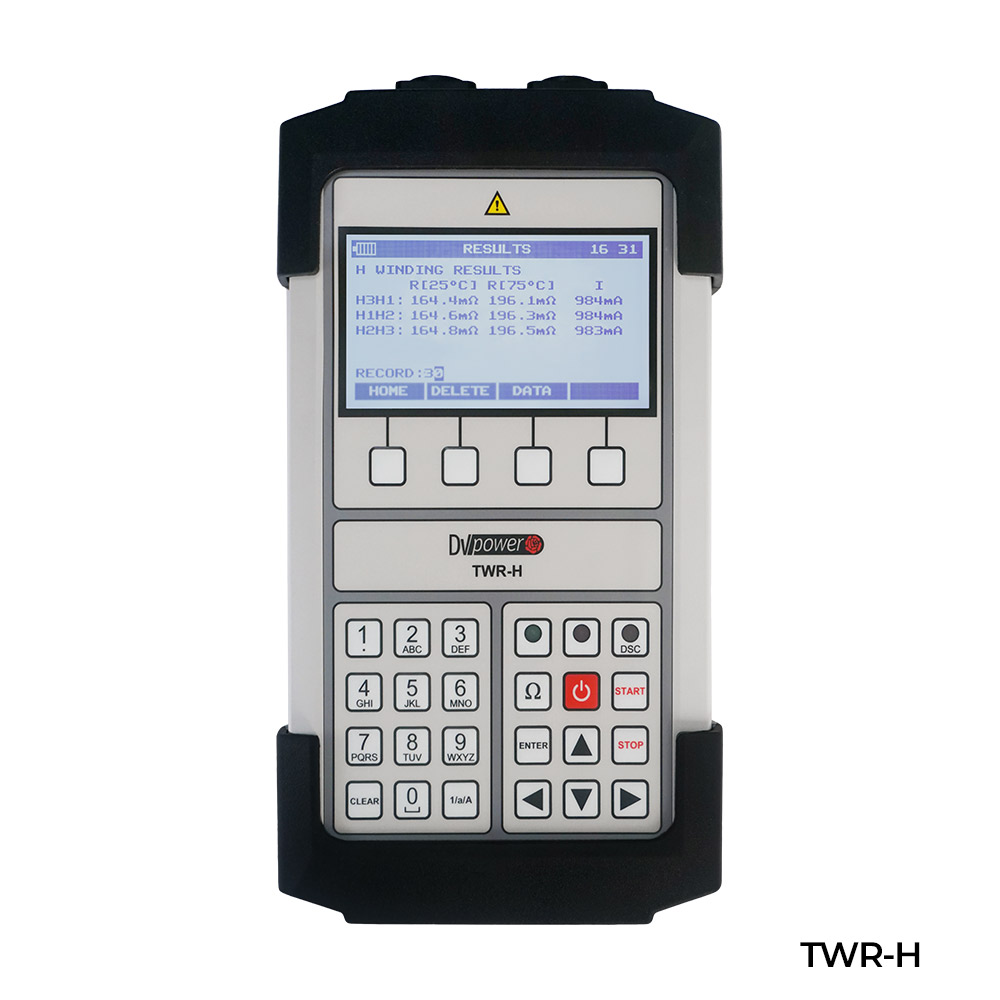
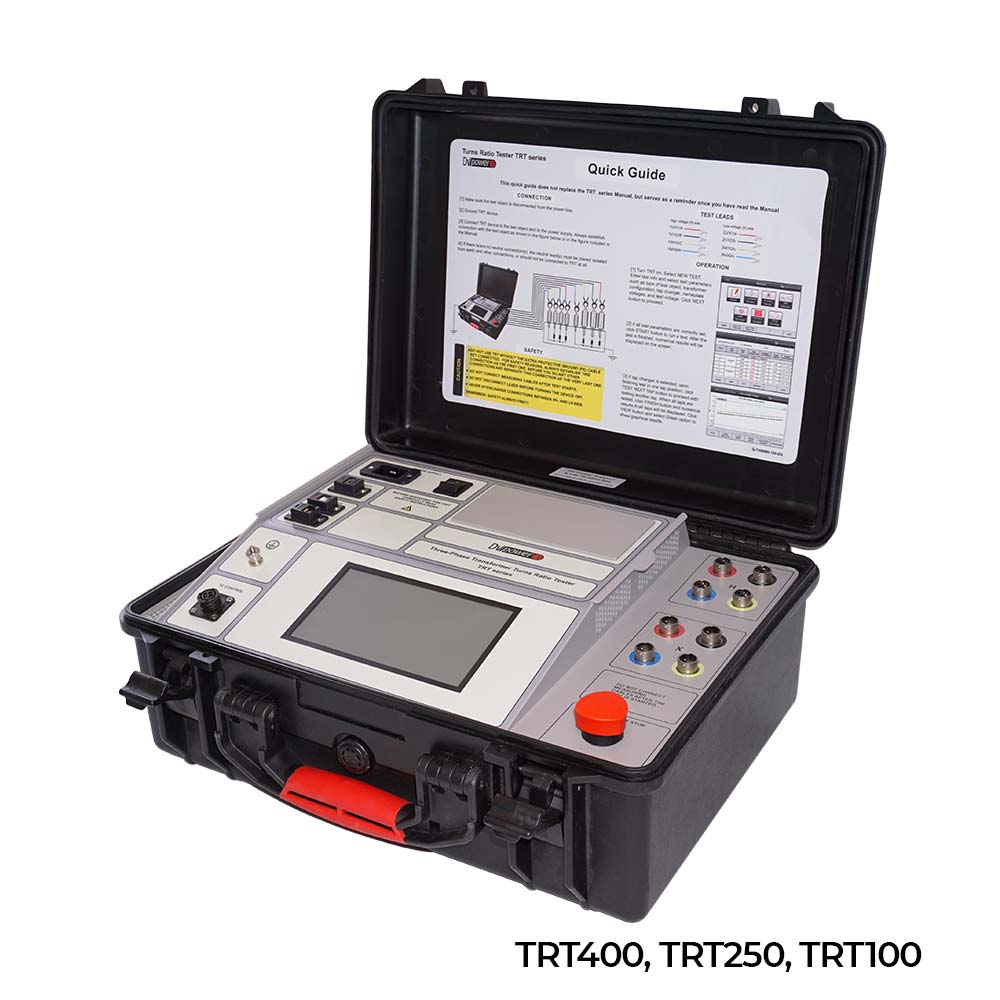
Transformer ratio meters (TTR) verify that a transformer’s windings have the correct turns ratio and polarity — a fast, sensitive check for shorted turns, tap-changer faults and wrong connections. The Amperis range for the electrical sector includes handheld and three-phase ratio meters for factory and field testing.
What it measures and how it works
The meter applies a known voltage to one winding and measures the voltage induced in the other to derive the turns ratio, together with polarity, phase displacement and excitation current. Each measured ratio is compared with the nameplate value, and for an on-load tap changer every tap position is checked in turn. A deviation points to shorted turns, a faulty tap or an incorrect vector-group connection; some instruments add a winding-resistance test in the same setup.
How to choose the right meter
- Decide between single-phase and automatic three-phase testing.
- Confirm the ratio range and accuracy for your transformers.
- Look for automatic tap-changer sequencing and vector-group support.
- Consider a combined winding-resistance option.
- Prioritise on-board storage and report export.
Not sure which ratio meter fits your fleet? Do not hesitate to contact us.
Applications
- Factory and site acceptance testing (FAT/SAT)
- Routine transformer maintenance
- After-fault diagnosis
- Tap-changer verification across all positions
- Instrument-transformer (CT/VT) ratio checks
Applicable standards
Amperis instruments are referenced to the IEC/EN and IEEE framework (not national PN/PL designations):
- IEC 60076-1 — power transformers: ratio tolerance of ±0.5% from nameplate, tested at each tap
- IEEE C57.12.90 — transformer test code
- IEC 61869 — instrument transformers (CT/VT ratio)
- IEC/EN 61010-1 — instrument safety
Frequently asked questions
What ratio error is acceptable?
IEC 60076-1 allows the measured ratio to deviate by no more than ±0.5% from the nameplate value. A larger error suggests shorted turns, a tap-changer problem or a connection error.
Why test every tap position?
On-load tap-changer faults often appear only at specific positions, so each tap is measured and compared; a single spot check can miss them.
Can a ratio meter test current and voltage transformers?
Yes. The same turns-ratio principle verifies instrument-transformer ratio and polarity, referenced to IEC 61869.
Technical resources
Combine ratio testing with winding-resistance ohmmeters, the wider transformer test range and circuit-breaker testing. Request a quote for the right configuration.