Multifunction installation testers
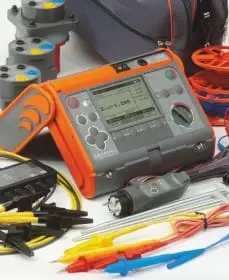
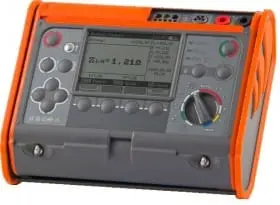

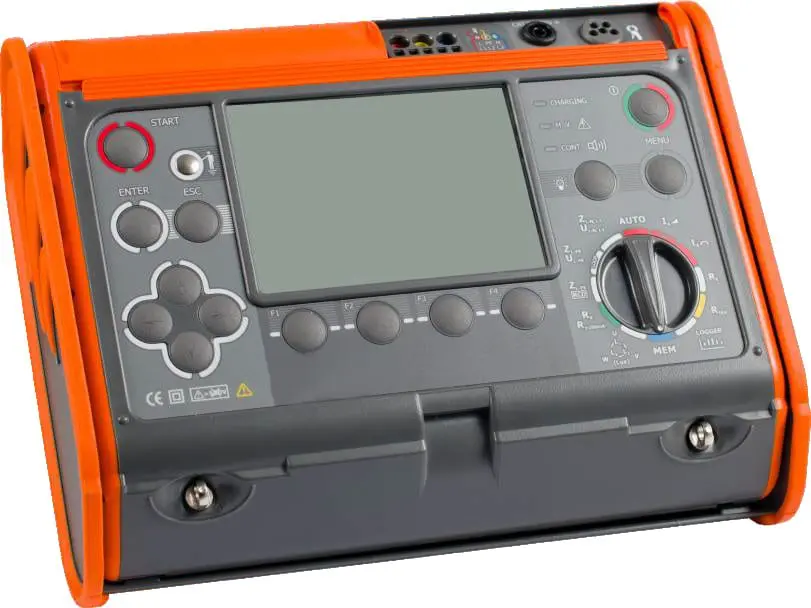
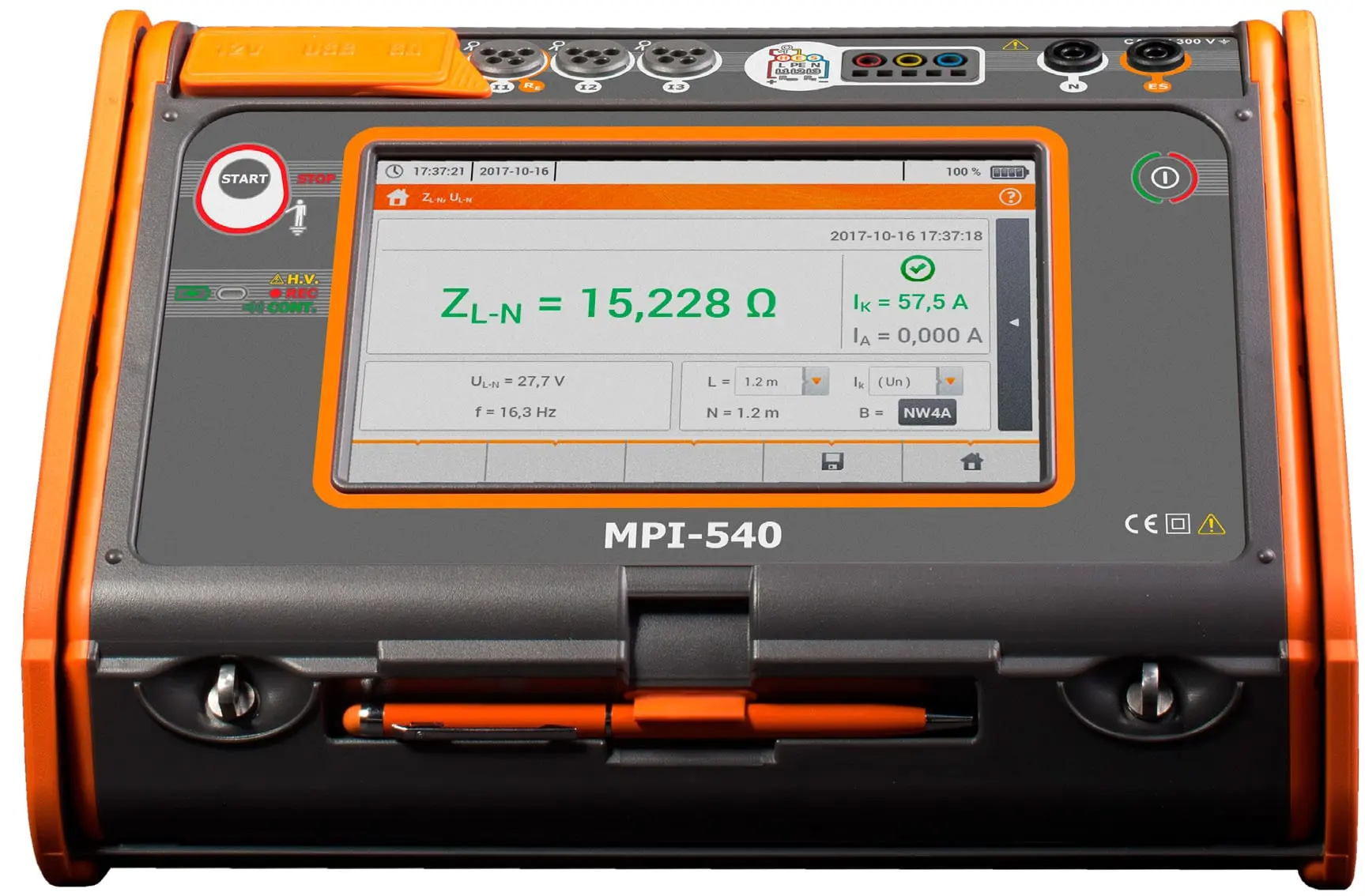
Multifunction installation testers bring together the electrical-safety checks of a low-voltage installation in one instrument — continuity, insulation resistance, loop and line impedance, RCD operation and earth resistance — for commissioning and periodic verification. The Amperis range for the electrical sector includes multifunction testers for installers and inspection bodies.
What it measures and how it works
A single tester runs the full verification sequence: continuity of protective conductors (with a 200 mA source), insulation resistance at 250/500/1000 V, loop and line impedance with the prospective short-circuit current, RCD trip time and current (including a no-trip mode), earth resistance and phase sequence. Automatic sequences and pass/fail limits speed up routine certification and keep records consistent.
How to choose the right tester
- Confirm it covers every function you certify (the relevant IEC 61557 parts).
- Look for automatic test sequences and stored limits.
- Check RCD type coverage (AC, A, F, B) and ramp testing.
- Prioritise memory, app/PC transfer and certificate export.
- Choose a rugged, IP-rated case for site work.
Not sure which functions you need? Do not hesitate to contact us.
Applications
- Building and industrial LV installation commissioning
- Periodic inspection and certification
- EV charging-point verification
- Photovoltaic and renewable installations
- Maintenance of distribution boards and final circuits
Applicable standards
Amperis instruments are referenced to the IEC/EN framework (not national PN/PL designations):
- IEC 61557 (parts 1–12) — performance of equipment for testing LV installation safety
- IEC 60364-6 — verification of low-voltage installations
- IEC/EN 61010-1 — instrument safety
Frequently asked questions
What is IEC 61557?
It is the series that defines the performance of instruments used to test the protective measures of low-voltage installations; each part covers a measurement (insulation, loop, RCD, earth, continuity, and so on).
Why a no-trip loop test?
On circuits protected by an RCD, a no-trip loop measurement determines the fault loop impedance without tripping the device, so testing does not interrupt supply.
What insulation voltage and value apply?
A 500 V DC test with a 1 MΩ minimum is typical for general LV circuits under IEC 60364-6; use 250 V where sensitive electronics are present.
Technical resources
Combine installation testing with tellurometers, insulation resistance meters and low-resistance ohmmeters. Request a quote.