Infrared & corona effect cameras
Infrared and corona-effect cameras find faults in electrical assets without contact. Thermal cameras reveal overheating joints, overloads and unbalanced phases, while corona (UV) cameras make surface discharge on high-voltage insulators and conductors visible in daylight. The Amperis range for the electrical sector includes both, for predictive maintenance and live-line inspection.
What they detect and how they work
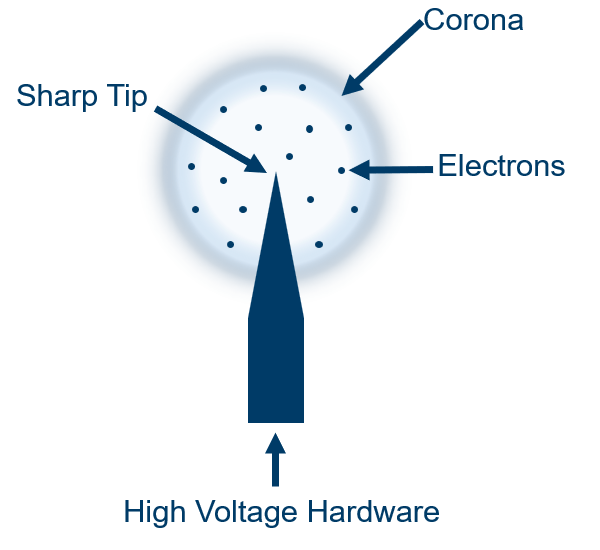
An infrared (thermographic) camera maps surface temperature, so a loose or corroded connection, an overloaded cable or an unbalanced phase shows up as a hot spot; severity is judged from the temperature rise over a healthy reference. A corona (UV) camera detects the ultraviolet photons emitted by partial and corona discharge, overlaying the discharge on a visible image to locate it on insulators, bushings and terminations before it leads to flashover. Both work at a safe distance on energised equipment.
How to choose the right camera
- For thermography: detector resolution, thermal sensitivity (NETD) and temperature range.
- For corona: UV sensitivity, solar-blind (daylight) operation and discharge counting.
- Consider working distance, optics and image fusion.
- Look for radiometric storage, analysis software and report generation.
Need help matching a camera to your inspections? Do not hesitate to contact us.
Applications
- Substation and overhead-line inspection
- Switchgear and connection hot spots
- Insulator, bushing and termination corona
- Motors, drives and rotating plant
- Photovoltaic and renewable installations
Applicable standards
Amperis equipment is referenced to international practice (not national PN/PL designations):
- ISO 18434-1 — condition monitoring and diagnostics: thermography
- Corona/UV detection has no single measurement standard, so results are comparative and support partial-discharge assessment
- IEC 60270 / IEC TS 62478 — partial-discharge measurement context
Frequently asked questions
Infrared or corona — what is the difference?
Thermography finds heat: resistive faults such as loose joints and overloads. Corona/UV finds discharge: insulation problems on high-voltage surfaces. They are complementary, not interchangeable.
When does corona matter?
Corona appears where the electric field at a surface exceeds the air’s breakdown threshold — typically on damaged or contaminated HV insulators and sharp points. Detecting it early prevents tracking and flashover.
How is a thermal hot spot rated?
By the temperature rise above a comparable reference point under similar load, following ISO 18434-1 practice and severity bands; the load at the time of inspection must be recorded.
Technical resources
Combine cameras with partial discharge detection for HV diagnostics, or explore other measurements. Request a quote and our engineers will advise on the right camera.