Micro-ohmmeters & loop impedance meters
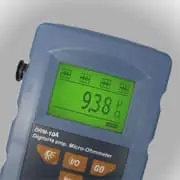
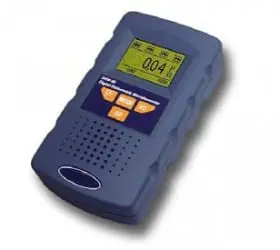
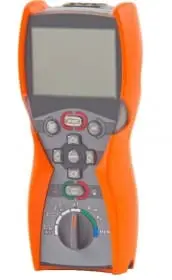
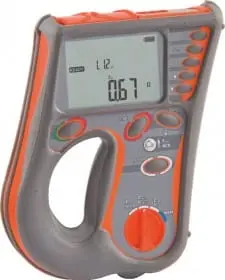
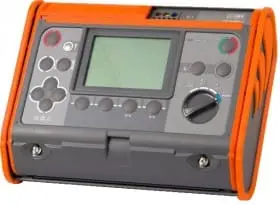
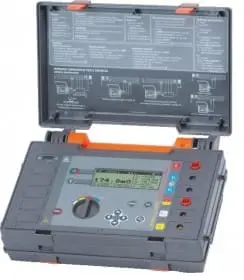
Low-resistance ohmmeters (micro-ohmmeters) and loop impedance meters measure the very small resistances that decide whether current flows safely — contact, joint and winding resistance, and the earth-fault loop of an installation. The Amperis range for the electrical sector includes high-current micro-ohmmeters and short-circuit loop impedance testers.
What it measures and how it works
A micro-ohmmeter uses the four-wire (Kelvin) method: it injects a known current — often from a few amps up to 100 A or more — and measures the resulting voltage drop, resolving micro-ohms free of lead and contact resistance. This is how breaker contacts, busbar and cable joints and transformer windings are checked. A loop impedance meter instead measures the earth-fault loop in a low-voltage installation to confirm the prospective fault current is high enough for protection to operate.
How to choose the right instrument
- Match the test current to the job: higher currents (≥100 A) for breaker contacts and joints.
- Require true four-wire leads for micro-ohm work.
- Check resolution and the resistance/impedance ranges you need.
- For loop testing, look for a no-trip mode on RCD-protected circuits.
- Prioritise memory and report export.
Not sure which instrument you need? Do not hesitate to contact us.
Applications
- Circuit-breaker and disconnector contact resistance
- Busbar, cable and bonding joints
- Transformer and machine winding resistance
- Earthing and equipotential bonding checks
- Earth-fault loop impedance in LV installations
Applicable standards
Amperis instruments are referenced to the IEC/EN framework (not national PN/PL designations):
- IEC 62271-1 — contact resistance of switchgear
- IEC 60076-1 — transformer winding resistance
- IEC 61557-3 — loop impedance measuring equipment
- IEC/EN 61010-1 — instrument safety
Frequently asked questions
Why use the four-wire method?
Separate current and voltage leads cancel the resistance of the test leads and contacts, so the reading reflects the true micro-ohm value of the joint or contact rather than the leads.
What test current should I use on breaker contacts?
A higher current (typically ≥100 A) mimics service conditions and breaks through oxide films; compare the result to the baseline, with healthy main contacts usually below 50 µΩ.
Why measure loop impedance?
It confirms the prospective short-circuit current is high enough for the protective device to disconnect within the time required by IEC 60364.
Technical resources
Combine low-resistance testing with circuit-breaker testing, transformer ratio and winding tests and multifunction installation testers. Request a quote.